· GEMA Engineering Team · Facility Management · 3 min read
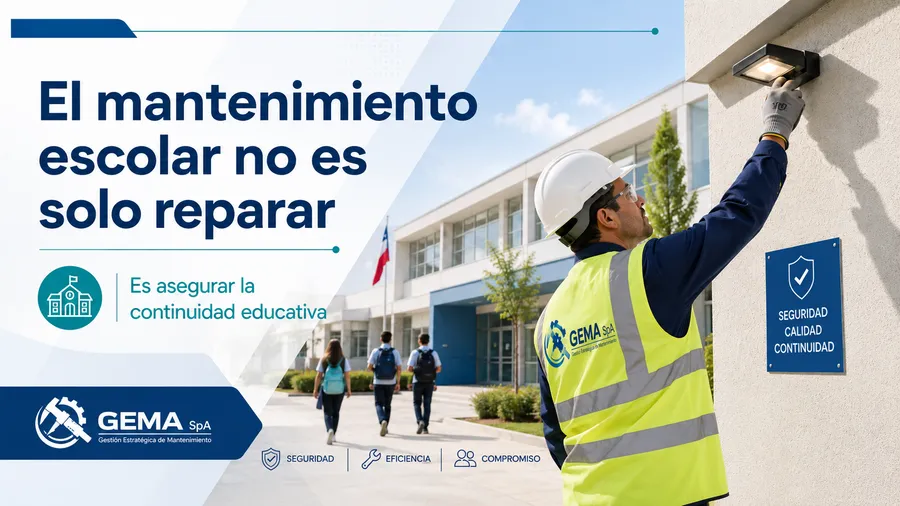
School Maintenance Isn't Just About Repairs — It's About Keeping Classes Running
Keeping campuses safe, operational, and energy-efficient requires a proactive approach. Discover how structured preventive maintenance saves costs and protects student health.

Educational institutions—from primary schools to expansive university campuses—are dynamic environments that host thousands of students, educators, and staff daily. Managing the infrastructure of these facilities presents unique challenges. Unlike standard commercial properties, educational spaces require high safety standards, continuous regulatory compliance, and a physical environment that actively supports learning.
To achieve this, facility managers are shifting from a reactive “run-to-failure” model to a structured Preventive and Predictive Maintenance strategy.
Why Educational Spaces Need Proactive Care
Waiting for a boiler to fail or an HVAC unit to break down in the middle of winter disrupts learning and leads to costly emergency repair fees. Preventive maintenance ensures that issues are identified and resolved before they impact the student body.
Here are the four pillars of preventive maintenance in education:
1. Student Safety and Regulatory Compliance
First and foremost, schools must be safe. A robust maintenance schedule includes regular checks on:
- Fire Safety Systems: Smoke detectors, alarms, and fire suppression systems.
- Electrical Safety: Routine testing of electrical panels and emergency generators.
- Indoor Air Quality (IAQ): Replacing filters and sanitizing HVAC ducts to prevent airborne pathogens and allergens.
2. Extending Asset Lifespan
Educational infrastructure is a major financial investment. Routine services, such as lubricating pump motors, testing water chemistry in heating systems, and sealing roofs, can double the functional lifespan of major equipment, deferring millions in capital replacement costs.
3. Energy and Operational Efficiency
Institutions consume vast amounts of water and power. According to energy audits, properly tuned building systems run up to 20% more efficiently. Simple steps like cleaning heat exchangers and optimizing building management system (BMS) scheduling reduce carbon footprint and operational utility bills.
4. Uninterrupted Class Schedules
When building infrastructure fails, schools often have to close. Reliable heating, cooling, lighting, and plumbing are fundamental requirements for the educational process. A proactive maintenance schedule schedules major overhauls during summer or winter breaks, eliminating educational disruption.
Implementing a Smart Maintenance Plan with GEMA
At GEMA, we specialize in designing customized facility engineering and maintenance plans for schools, universities, and technical institutes. We utilize advanced diagnostics, thermal imaging, and condition monitoring tools to keep your campus running flawlessly.
Key Elements of Our Approach:
- Asset Mapping & Diagnostics: We create a complete registry of your facility’s machinery and structures, assigning health scores and risk indicators.
- Scheduled Overhauls: We align intensive repairs with school holidays to prevent academic downtime.
- Dedicated Emergency Response: Local engineering teams on-call 24/7 to resolve critical issues instantly.
A well-maintained school is more than just a building; it is a safe harbor where the next generation grows. By investing in preventive facility maintenance, educational leaders protect both their financial assets and their community’s well-being.
Need an Infrastructure Assessment?
Get a professional evaluation to optimize your facilities, ensure safety compliance, and plan preventive maintenance.
Request a school infrastructure assessment